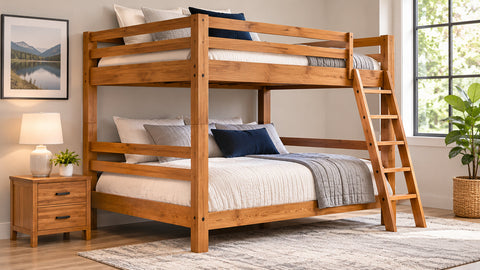

A double mattress is a practical option for Canadian bedrooms where comfort and floor space need to work together. Wider than a twin but more compact than a queen, it offers extra sleeping room without requiring a particularly large bedroom. However, the names double and full can create confusion, especially when comparing Canadian and American products, measuring an existing bed frame or shopping for fitted sheets. Knowing the correct dimensions before purchasing can prevent costly mistakes with furniture and bedding.
This guide explains standard double mattress dimensions in inches, centimetres and feet, along with the small variations found between manufacturers. It also covers double versus queen sizing, bedroom clearance, full-size bed frames, mattress thickness and bedding compatibility. Whether you're replacing an older mattress, furnishing a guest room or planning a double bed for a smaller Canadian home, you'll learn how to check the complete setup rather than relying on a size label alone.
Double Mattress Dimensions in Canada
The commonly accepted nominal double mattress size in Canada is 54 inches wide by 75 inches long. A double is also called a full mattress, and both names generally describe the same standard sleeping surface. This size provides considerably more width than a twin while remaining shorter and narrower than a queen.
Actual finished dimensions can vary between brands. Some Canadian mattresses are listed at 53 inches wide or 74 inches long rather than the nominal 54 × 75 inches. Those differences matter most when replacing a mattress in a closely fitted frame or choosing accessories that need to fit securely.

Double Bed Measurements
| Measurement | Standard Double / Full |
|---|---|
| Width in inches | 54 inches |
| Length in inches | 75 inches |
| Width in centimetres | 137.16 cm |
| Length in centimetres | 190.5 cm |
| Width in feet | 4.5 feet |
| Length in feet | 6.25 feet |
| Sleeping surface area | 28.125 square feet |
| Typical sleepers | One adult or two sharing limited space |
These are nominal mattress measurements, not guaranteed finished dimensions or external bed-frame measurements. Mattress thickness also varies by model and is not included in this chart.
Why Dimensions May Vary
Manufacturers may use slightly different finished measurements because of construction methods, foam encasement, quilting and product-specific sizing conventions. A difference of approximately one inch does not necessarily mean that a mattress belongs to a different standard size category.
For example, Master Bedroom Stores lists the Sealy Essentials Medium Tight Top Mattress in Double at 53 inches wide, 74 inches long and 11 inches high. The nominal double size remains 54 × 75 inches, but the individual product specification is the more useful measurement when checking an exact fit.
Is Double the Same as Full?
Yes. In Canada, the terms double and full generally refer to the same mattress category. Canadian furniture stores commonly use double, while some American brands and online retailers use full or full size. The naming difference usually does not indicate a different sleeping-surface dimension.
A mattress labelled full should normally be compatible with furniture designed for a standard double, provided both products follow the same size conventions. However, this is not a reason to skip measurements, particularly when combining an imported bed frame with a mattress from another manufacturer.
Canadian and American Names
The standard North American double/full category is approximately 54 × 75 inches. You may encounter both terms when shopping for mattresses, bed frames, protectors or fitted sheets in Canada.
The important distinction is between the size name and the finished measurement. If the exact fit matters, look for the manufacturer's width, length and allowable sizing tolerances instead of assuming every full mattress measures precisely 54 × 75 inches.
Double Bed Size in Feet
A nominal double mattress is 4.5 feet wide and 6.25 feet long. Expressed another way, it measures 4 feet 6 inches across and 6 feet 3 inches from head to foot.
These figures are useful when planning a bedroom measured in feet. They make it easier to compare the mattress footprint with room dimensions, but you still need to account for the surrounding frame and space needed for movement.
How Much Floor Space?
A standard double mattress occupies approximately 28.1 square feet of sleeping-surface area. This is noticeably less than the roughly 33.3 square feet occupied by a standard queen mattress.
The difference can be valuable in a smaller room, but the mattress footprint is not the same as the entire bed footprint. A wooden or upholstered frame may add extra width and length, sometimes enough to affect where a nightstand or dresser can be placed.
Double vs. Twin Mattress
A double mattress offers more sleeping width than a twin, making it attractive to adults who find a single bed restrictive. Both standard sizes share a nominal length of 75 inches.
A twin is typically approximately 38–39 inches wide, depending on the manufacturer. Moving to a double adds around 15–16 inches of width without requiring additional length along the wall.
When a Double Is Better
A double may be more comfortable for a single adult who changes sleeping positions or prefers extra space for arms and shoulders. It also allows more flexibility for overnight guests than a standard twin.
For children, the larger sleeping surface can remain useful as they grow, provided the room has adequate space. However, a twin may still be more practical in rooms shared with a desk, wardrobe or other substantial furniture.
Double vs. Queen Dimensions
The size difference between a double and queen is important because it affects both personal sleeping space and bedroom layout. A queen is six inches wider and five inches longer than a nominal double.
Those measurements may appear modest, but the extra length can matter to taller sleepers, while the additional width can make a shared bed more comfortable.
| Feature | Double / Full | Queen |
|---|---|---|
| Nominal width | 54″ | 60″ |
| Nominal length | 75″ | 80″ |
| Size in feet | 4.5 × 6.25 | 5 × 6.67 |
| Width per person when shared | 27″ | 30″ |
| Mattress floor area | 28.1 sq. ft. | 33.3 sq. ft. |
| Main advantage | Smaller footprint | More width and length |

Which Size Suits Couples?
Two adults sharing a double have approximately 27 inches of width each. A queen increases that to approximately 30 inches per person and provides extra legroom.
Some couples are comfortable sharing a double, particularly when their bedroom is small. Others find the width restrictive, especially if one or both people move frequently during the night. A queen is worth considering when the room can accommodate the larger frame without compromising everyday access.
Is a Double Long Enough?
At 75 inches long, a standard double is 6 feet 3 inches from head to foot. That does not mean every person shorter than 6 feet 3 inches will find it spacious, since pillows, sleeping posture and preferred leg position affect usable length.
Taller adults often benefit from comparing a queen or twin XL, both nominally 80 inches long. The extra five inches can be more significant than upgrading mattress width alone.
Who Should Choose a Double?
Double mattresses work especially well for single sleepers who want more space than a twin but do not require a queen. They can also suit teenagers, guest rooms and certain smaller bedrooms.
The best choice depends on how the bed will be used. A room that primarily serves one person has different requirements from a guest bedroom intended to accommodate two adults occasionally.
Single Adults and Teenagers
For a single adult, a double provides room to move and change positions without occupying as much floor space as a queen. This can be particularly useful in a condo or apartment where a bedroom must also accommodate storage.
Teenagers may appreciate the additional width as they grow. Still, mattress length should be considered if the sleeper is tall, since a double is no longer than a standard twin.
Guest Bedrooms
A double is a practical guest-room option when the space also needs to hold a dresser, luggage rack or desk. It accommodates one adult generously and may work for two guests who are comfortable sharing a smaller bed.
If couples regularly stay overnight and the bedroom is sufficiently large, a queen may provide greater flexibility. The decision should balance guest comfort with the room's other uses.
Double Mattress Room Size
There is no single minimum room dimension that guarantees a comfortable double-bed layout. The result depends on the external bed frame, door positions, storage furniture and access requirements.
A bedroom around 9 × 10 feet may accommodate a double with careful planning, while a 10 × 10-foot room can provide additional flexibility. These are illustrative furniture-layout examples rather than building requirements or universal minimums.
How to Measure Your Room
Start by recording the usable width and length of the bedroom. Include any areas restricted by doors, closets, radiators or built-in furniture.
Then measure the complete bed frame, not only the mattress. A double mattress measuring 54 × 75 inches may sit inside a frame that extends several inches beyond those dimensions, changing how much walking space remains.
Walking Clearance
As a general furniture-planning target, approximately 24 inches of clear space beside accessible parts of a bed can be useful. Where possible, 30–36 inches may provide more comfortable circulation.
These measurements are planning suggestions, not universal accessibility or building-code requirements. Additional space may be needed for mobility aids, furniture drawers or other individual circumstances.
Double Bed Room-Fit Examples
Room-fit calculations help translate mattress dimensions into practical floor plans. Subtract the full external width of the bed frame from the usable room width to estimate the combined space remaining on either side.
For these examples, assume a hypothetical double bed frame measuring 58 inches wide by 79 inches long. These are demonstration measurements, not the published specifications of a particular product.
Double Bed in a 9 × 10 Room
A 9 × 10-foot bedroom measures 108 × 120 inches. With the 58-inch frame positioned across the 108-inch room width, 50 inches remains in total.
If the bed is centred, that provides approximately 25 inches on either side before other furniture is added. With the headboard against the opposite wall, around 41 inches remains beyond the foot. The arrangement may be workable, but bedside tables and door swings could reduce available space considerably.
Double Bed in a 10 × 10 Room
A 10 × 10-foot room measures 120 inches in each direction. Using the same 58 × 79-inch frame leaves 62 inches of combined side space.
Centring the frame provides approximately 31 inches on each side, while the foot clearance remains about 41 inches. The additional width can make it easier to use nightstands or move around the bed.
What These Examples Mean
The room dimensions alone do not establish whether the layout is comfortable. A deep dresser, an inward-opening closet door or a large headboard can change how much space remains.
Use the calculations as a starting point, then arrange the surrounding furniture on a simple floor plan. The ideal position may not be centred if another layout provides better access.
Double Mattress vs. Bed Frame Size
A mattress and the furniture holding it are not necessarily the same size. Mattress measurements describe the sleeping surface, while bed frame dimensions include rails, upholstery and any decorative structural components.
This difference is especially important when replacing only the mattress. A new double may fit a frame designed for the same nominal size, but product-specific measurements should still be checked.
Platform Bed Fit
A double platform bed usually supports the mattress using an approved slatted or solid surface. The exact support requirements depend on the mattress and frame.
Some platform frames have narrow surrounding rails, while others extend visibly beyond the mattress. If you're shopping for a new bed, compare the complete dimensions and support details in the Master Bedroom Stores platform beds collection.
Upholstered Bed Frames
Upholstered frames can add noticeable bulk around the sleeping surface. Thick side rails, padded headboards and decorative footboards may create a substantially larger footprint than the mattress itself.
This matters in compact rooms where an extra few inches could affect door or drawer clearance. When comparing designs, use the published assembled width and length rather than relying on photographs.
Older Double Bed Frames
Older beds may not match modern nominal dimensions precisely. Antique and vintage frames can have unique internal measurements, altered supports or uncommon sizes.
Before replacing the mattress, measure the usable internal space and inspect the condition of the frame. An older bed should not be assumed compatible with a new standard double simply because the existing mattress was described as full size.
Double Mattress Foundation Fit
A foundation provides or contributes to the support beneath a mattress. Depending on the furniture design, this might involve a platform, slats, an upholstered foundation or a compatible box spring.
Selecting the correct foundation requires checking both size and support requirements. A double-size label alone does not establish that every foundation will work with every mattress construction.
Double Box Spring Dimensions
Master Bedroom Stores lists a Premium Quality Double Mattress Foundation with a published double foundation footprint of approximately 54 × 74 inches.
This is a useful example of how a foundation may be slightly shorter than the commonly quoted 54 × 75-inch nominal mattress size. Product-specific compatibility should be confirmed rather than assuming an exact one-to-one match.
Platform vs. Foundation
Some bed frames are designed to support a compatible mattress directly, while others require an additional foundation. The correct arrangement depends on the frame construction and mattress manufacturer's instructions.
Before purchasing a foundation separately, review the required support type, acceptable spacing between slats and any restrictions that affect warranty coverage.
Mattress Thickness and Bed Height
Double mattress dimensions usually refer to width and length, but thickness is equally important when choosing bedding and determining the finished bed height.
Two double mattresses may have similar sleeping-surface dimensions while differing substantially in profile. A thick Euro-top mattress may create a taller bed than a lower-profile tight-top design placed on the same foundation.
Does Mattress Height Matter?
The combined height of the frame, foundation and mattress determines how high the sleeping surface sits above the floor. Some people prefer a higher bed, while others find a lower surface easier to enter and exit.
There is no universally correct bed height. Consider the person using the mattress, the surrounding furniture and the manufacturer's recommended support arrangement.
A Real Double Mattress Example
The Sealy Posturepedic Farah Firm Tight Top Mattress is listed by Master Bedroom Stores in Double at approximately 53 inches wide, 74 inches long and 11.5 inches high.
These measurements illustrate why mattress height should be checked independently from the size name. A fitted sheet must accommodate the 11.5-inch profile, while the frame must support the mattress's actual width and length.
Double Bed Sheet Sizes
Double and full fitted sheets are generally designed for the same standard mattress category. In Canada, a package labelled double fitted sheet or full fitted sheet should normally correspond to a nominal 54 × 75-inch sleeping surface.
However, fitted sheets also need the correct pocket depth. A sheet may be wide and long enough but fail to stay secured around the corners of a thicker mattress.
Fitted Sheet Measurements
When checking a fitted sheet, look for the labelled mattress width, length and supported depth range. Common double fitted sheets are designed around the nominal 54 × 75-inch size, but elastic construction and manufacturer tolerances can differ.
A mattress measuring 53 × 74 inches may still work with many standard double fitted sheets, depending on the sheet's elastic and design. Confirm the product details if a close fit is particularly important.
Standard vs. Deep Pocket
A standard-pocket sheet may suit many lower-profile mattresses, while a deep-pocket design is intended for greater mattress thickness. The exact depth ranges differ between bedding manufacturers.
For example, a fitted sheet advertised for mattresses up to 15 inches deep may accommodate an 11-inch mattress, but fit still depends on the sheet's construction. Match the stated supported depth rather than relying only on the phrase deep pocket.
Mattress Protectors and Toppers
A mattress protector should fit the same nominal width and length as the mattress while accommodating its thickness. Waterproof, quilted and fitted-skirt protectors may have different installation and depth requirements.
A topper adds another layer to the sleeping surface. If it sits beneath the fitted sheet, its thickness affects the combined profile that the sheet must cover.
Double Mattress Protectors
A protector labelled double or full is generally intended for the same mattress category as double fitted bedding. Nevertheless, some products are designed to stretch, while others have more fixed dimensions.
Check the supported mattress depth and the type of attachment. A protector that is too loose may shift during use, while one that is too tight can be difficult to install properly.
Adding a Mattress Topper
A double topper should correspond to the mattress's width and length. Although nominal sizes provide a starting point, the topper may be slightly smaller than the mattress depending on the manufacturer.
Master Bedroom Stores has a mattress toppers collection where shoppers can compare available options. Before choosing one, consider how the added thickness will affect fitted sheets and finished bed height.
Duvets and Comforters for Double Beds
Unlike fitted sheets, duvets and comforters are intended to cover the sleeping surface and hang over the sides. Their dimensions are therefore usually larger than the mattress itself.
There is no single universal duvet measurement for a double bed. Some bedding manufacturers group double and queen into one category, while others sell separate sizes.
Double vs. Double/Queen Bedding
A double/queen comforter may work on a double bed, but its side overhang will usually be greater than on a queen. Whether that is desirable depends on mattress height and personal preference.
For a particularly tall mattress, additional overhang may look balanced. On a low-profile bed, oversized bedding may hang closer to the floor. Check the finished dimensions of the duvet rather than assuming every double/queen label means the same thing.
Choosing the Right Cover
Duvet covers should be selected according to the duvet insert's actual dimensions rather than the mattress size alone. A cover that is substantially larger than the insert may allow the filling to shift.
When replacing bedding, measure the duvet insert and check the manufacturer's matching cover size. You can also explore the store's bedding collection for related bedroom accessories.
Pillow Sizes for Double Beds
A double mattress commonly accommodates two standard sleeping pillows side by side, although the appearance and available space depend on the pillows' dimensions.
Standard pillows are often approximately 20 × 26 inches, while queen pillows are commonly longer. Decorative arrangements may use different shapes and sizes to complement the headboard.
Avoiding an Overcrowded Bed
Large decorative pillows can look attractive in photographs, but a double mattress has less width than a queen. Too many oversized cushions may leave limited usable space or create unnecessary clutter.
A practical arrangement often begins with the pillows used for sleeping, followed by a small number of decorative accents if desired. The best arrangement should suit the bed's scale and everyday use.
Choosing a Double Mattress Feel
Mattress size determines the available sleeping surface, but firmness and construction determine much of the comfort experience. Two double mattresses with identical dimensions can feel very different.
A person who prefers a firmer surface may choose a different model from someone looking for a more cushioned feel, even when both require the same size.
Foam vs. Pocket Coil
Foam mattresses may offer a different contouring feel from mattresses built around pocket coils. Hybrid constructions combine multiple materials, but the exact comfort depends on the model.
For a double mattress, the choice of construction should reflect the sleeper's comfort preferences, support needs and frame compatibility. The size category itself does not determine which material will feel best.
Checking Product Specifications
When comparing double mattress options at Master Bedroom Stores, review both the comfort description and the exact size variant.
Product-specific dimensions are especially useful when an existing frame has limited tolerance. Compare width, length, thickness and manufacturer-approved foundation requirements before selecting a model.
Double Mattresses for Bunk Beds
Some bunk beds use a double mattress on one or both levels. Twin over double and double over double arrangements can provide a wider lower sleeping surface than traditional twin bunks.
Bunk-bed mattresses require additional checks because frame compatibility and upper-level safety depend on more than width and length.
Upper Bunk Thickness
A mattress used on an upper bunk must meet the bunk manufacturer's maximum thickness requirements. A mattress that is too tall can reduce the protective height of surrounding guardrails.
The permitted mattress thickness should be taken from the exact bunk bed's label or instructions. A standard double mattress is not automatically suitable for an upper bunk even if its nominal dimensions match.
Twin Over Double Layouts
A twin over double bunk combines a narrower upper sleeping surface with a wider lower one. This arrangement may suit households with different sleeping needs on each level.
For more information about the furniture configuration, see the Twin Over Double Bunk Bed Buying Guide. The frame's specified mattress requirements should always take priority over general size charts.
Moving a Double Mattress
A double mattress is usually easier to manoeuvre than a queen or king because it is shorter and narrower. Even so, doorways, staircases and tight hallways can create delivery challenges.
Mattress construction influences how much the product can flex during movement. Not every mattress can be bent, folded or compressed without risking damage.
Doorway Measurements
Measure the narrowest usable doorway along the intended delivery route. The position of doors, handles and nearby walls can reduce clearance.
A mattress may fit through a doorway when held upright but still be difficult to turn into an adjacent hallway. Consider the complete route rather than checking only the bedroom entrance.
Mattresses Delivered in a Box
Some double mattresses are compressed for delivery, making them easier to move before opening. Packaging dimensions and expansion instructions vary by manufacturer.
The mattress-in-a-box collection provides examples of this format. Verify the exact Double variant and delivery packaging before assuming a particular model will arrive compressed.
Replacing an Existing Double Mattress
Replacing a double mattress is often straightforward when the existing frame is modern and in good condition. However, checking its measurements and support system remains worthwhile.
Older furniture, specialty frames and replacement foundations can create fit problems even when the new mattress carries the same size label.
Measure the Old Mattress
Record the width, length and thickness of the existing mattress before removing it. Then measure the internal support area of the frame, including any rails or surrounding edges.
If the mattress has sagged or changed shape with age, its current measurements may not be a perfect guide to its original dimensions. Frame specifications, when available, are more reliable.
Check the Bed Base
Inspect the foundation or slats for wear, movement or damage. A deteriorated support system may affect the performance of a new mattress.
Confirm that the replacement mattress is approved for the existing base. A new mattress should not be installed on an incompatible support simply because the previous one appeared to fit.
Common Double Bed Sizing Mistakes
Many double mattress fit problems arise from assuming that all products sharing the double or full label have identical finished measurements.
Others involve choosing bedding or bed frames without considering mattress thickness and the room's usable floor area.
Assuming All Doubles Are 54 × 75
The nominal size is approximately 54 × 75 inches, but individual products can differ. Some Master Bedroom Stores Sealy models, for example, list Double dimensions of 53 × 74 inches.
These differences may be acceptable within the intended bed system, but they should not be ignored when working with a closely fitted frame. The actual product specification is the appropriate reference for a final purchase.
Buying Queen Bedding by Mistake
A queen fitted sheet is designed for a wider and longer mattress than a double. It may bunch, fit loosely or fail to stay in place.
Choose fitted bedding labelled double or full and verify the supported depth. Top bedding has more flexibility because some duvets are intentionally sold in combined double/queen sizes.
Forgetting the Bed Frame Footprint
A 54-inch-wide mattress does not mean the complete bed occupies only 54 inches across. Upholstered rails or decorative wood structures can increase the external footprint.
Always measure the assembled frame when planning walking clearance or positioning furniture beside the bed.
Double Mattress Buying Checklist
A final fit check helps ensure that the mattress, supporting furniture and bedding work together. It is particularly valuable when replacing one component of an existing setup rather than purchasing a complete new bed.
Use the following checks before ordering a double mattress:
-
Confirm the exact width, length and thickness of the mattress.
-
Compare the mattress dimensions with the frame's approved size.
-
Check the foundation or slat support requirements.
-
Measure usable bedroom space and furniture clearance.
-
Verify fitted-sheet and protector pocket depth.
-
Check duvet dimensions if replacing top bedding.
-
Confirm delivery access through hallways and doorways.
-
Review the selected product's size availability and warranty conditions.
A few minutes spent checking measurements can prevent unnecessary exchanges and help create a more comfortable bedroom layout.
Final Verdict
A standard double mattress in Canada measures approximately 54 inches wide by 75 inches long, or 4.5 × 6.25 feet. It is also known as a full mattress and provides more sleeping width than a twin while occupying less space than a queen. For single adults, teenagers and guest rooms, a double can offer a practical combination of comfort and room flexibility. Couples may find it suitable for occasional or regular use, although a queen provides more personal width and additional length.
The most important buying detail is that nominal mattress dimensions are not always identical to the measurements of individual products. Check the actual mattress, bed frame, foundation and fitted bedding before purchasing, especially when replacing an older setup. To compare double-size mattress options and their specifications, explore the Master Bedroom Stores mattress collection.
Frequently Asked Questions
What are standard double mattress dimensions in Canada?
The nominal double mattress size in Canada is approximately 54 inches wide by 75 inches long, equivalent to 137.2 × 190.5 centimetres. It is also known as a full mattress. Some manufacturers use slightly different finished measurements, such as 53 × 74 inches, so the exact product specification should be checked before purchasing a fitted frame or mattress accessories.
Is a double mattress the same size as a full?
Yes. Double and full generally refer to the same North American mattress size category. Canadian retailers commonly use the name double, while some American brands use full. Both typically describe a mattress with nominal dimensions of 54 × 75 inches. However, individual manufacturers may list slightly different actual measurements, so checking the width and length remains important.
How big is a double bed in feet?
A standard double mattress measures 4.5 feet wide and 6.25 feet long, or 4 feet 6 inches by 6 feet 3 inches. These are mattress measurements rather than the external dimensions of the complete bed. A frame with upholstered rails, a headboard or a footboard may occupy additional floor space.
Is a double mattress suitable for two adults?
A double can accommodate two adults, but it provides approximately 27 inches of width per person when shared equally. Some couples find that sufficient, while others prefer the extra space offered by a queen. Body size, sleeping habits and personal comfort preferences all influence whether a double feels practical for regular shared use.
What size room do I need for a double bed?
A room around 9 × 10 feet can be a useful starting point for double-bed planning, while a 10 × 10-foot bedroom may provide more flexible furniture placement. These are illustrative dimensions, not universal minimum requirements. The full bed frame, nightstands, dresser, doors and walking clearance determine whether a particular layout will work comfortably.
What fitted sheet size fits a double mattress?
Look for fitted sheets labelled Double or Full, typically designed for a nominal 54 × 75-inch mattress. Also check the supported mattress depth, since a sheet may have the correct width and length but insufficient pocket depth for a thicker mattress. Manufacturers use different elastic constructions and tolerances, so exact product dimensions are helpful.
Will a double mattress fit a queen bed frame?
A double mattress is generally not an appropriate replacement for a queen mattress in a standard queen frame. A queen is nominally six inches wider and five inches longer, so a double can leave unsupported areas or significant gaps. Use a frame or manufacturer-approved support system designed for the actual mattress dimensions rather than assuming the smaller size will work.
How do I check double mattress and bed frame compatibility?
Compare the mattress's exact width and length with the bed frame's supported dimensions. Review foundation requirements, slat spacing and any restrictions on mattress thickness or construction. Older frames and specialty beds may need additional measurement checks. The correct setup should support the mattress properly and follow both manufacturers' instructions.