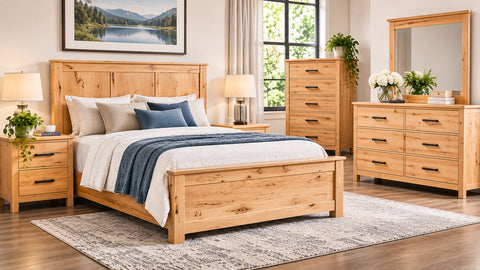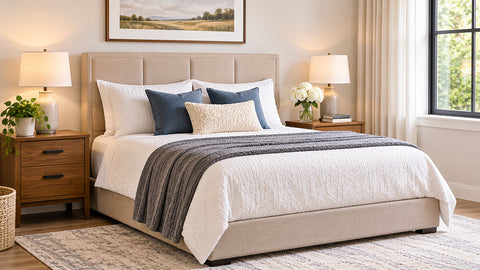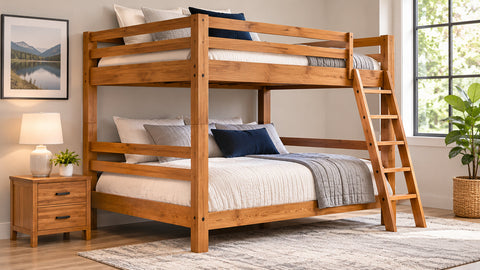

You come home after a long day, open the bedroom door and switch on the lamp. There’s somewhere to put your bag. The bed is made, the slippers are where you left them, and the light is just bright enough to find the book on your nightstand. None of it is extravagant. It’s the feeling of walking into a room that’s ready for you.
The best beautiful bedroom ideas start with that moment. Think about what you see from the doorway, what you reach for before bed and what slows you down in the morning. Soft lighting, bedding you enjoy and furniture that fits your routine can make the room feel more welcoming. Start with the changes you’ll notice most, whether that means moving a dresser, finding a better place for the bedside lamp or choosing a bed frame that suits the room.
Start With How You Want the Room to Feel
Stand in the doorway and look at what catches your eye. It might be the bed, the window or a chair piled with clothes. If there’s something you enjoy seeing, give it a little more space. If there’s a spot where clutter keeps returning, think about why it lands there. A chair covered in clothes may be doing the job of a hook or hamper. A crowded nightstand may need a drawer for chargers and glasses.
Choose two or three words for the feeling you’re after, such as warm and simple, quiet and airy or soft and layered. Use those words to make smaller decisions. A room you want to feel warm might benefit from an oak finish and cream bedding. If you want it to feel airy, try lighter curtains and a clearer surface beside the bed. You can keep a favourite dark dresser in either room. Its colour can give the lighter pieces something to work around.
Think about mornings as well as evenings. If you get ready before your partner wakes up, a lamp by the dresser and a clear route to the closet may make the room easier to share. If you read before bed, put the light and books within reach from the side you use. These details help you decide where to spend time and money.
Make the Bed the Focal Point
Choose a Frame That Looks Right From the Doorway
The bed is usually the largest piece in the room. A low-profile frame leaves more wall visible, while a tall headboard gives the wall a stronger focal point. An upholstered headboard adds a softer surface to lean against. A wood headboard can pick up the tone of your floor, dresser or nightstands.
Before replacing the frame, mark its full footprint on the floor. Include the headboard, side rails and footboard. Check how it looks from the doorway and how much space it leaves to make the bed or open drawers. If the bed sits under a window, measure the headboard height against the sill. If you plan to keep your mattress, confirm that the frame meets its support requirements.
Layer Bedding You’ll Enjoy Using
Cozy bedroom ideas can start with the bedding you already own. Smooth out the sheets, fold the duvet back and place a throw across the foot of the bed. If the duvet and throw are similar in colour, choose different textures so each layer is visible. A woven blanket can stand out against smooth cotton without introducing another colour.
Choose a duvet or quilt that works for the season, then add a lighter layer you can fold back or pull up. If you enjoy decorative cushions, use a few you can easily put away at night. A bed can look inviting with one textured cushion and a neatly folded throw, leaving less to move when you’re ready to get in.
Use Lighting That Works From Morning to Evening
Give Each Light a Job
An overhead light is useful for getting dressed, changing sheets or finding something on the floor. A bedside lamp gives you light for reading or getting ready for bed. A separate lamp by a dresser or chair only earns its place if you use that spot regularly. If there’s no room for a lamp beside the bed, a wall-mounted reading light can free up the nightstand.
Check the room after dark. Sit where you normally read and see where the light falls. A lamp may look right on the nightstand and still sit too low to light the page comfortably. If the bulb is directly in your line of sight, try adjusting the lamp, choosing a shade that softens the light or moving the lamp to another spot. Make sure the switch is easy to reach before deciding where it belongs.
Work With the Daylight You Have
Keep tall furniture away from windows where it would block the daylight you want. If you like soft light in the morning, try a sheer curtain with a separate blind for privacy at night. If the sun reaches the bed earlier than you’d like, room-darkening curtains give you more control.
A mirror can make a dim corner feel brighter if it reflects an already well-lit part of the room. Test the position before hanging it. A mirror opposite the window may give you a bright reflection, while a side wall may work better if direct glare is an issue. A full-length mirror near the closet can also serve a practical purpose if there’s room to step back.
Build a Palette With Colour and Texture
Start with something that’s staying in the room. It could be a walnut dresser, a favourite print or a quilt you already love. Pull one colour from it and repeat that colour in a smaller detail, such as a lampshade, cushion or rug. Repeating a colour gives pieces from different collections a connection.
A few combinations to try:
| If you want the room to feel… | Start with… | Add texture through… |
|---|---|---|
| Warm and understated | Warm white, light oak and muted brown | A woven throw or a linen-look headboard |
| Light and open | Soft grey, cream and pale wood | A low-pile rug or loosely woven curtains |
| Soft and layered | Charcoal, taupe and one muted accent colour | A quilted coverlet, textured cushions or a fabric lampshade |
Check colours in daylight and again under the lamps you use at night. A paint sample that looks pale grey in the shop may look warmer next to your floor. When combining patterns, give the strongest one room to stand out. If the rug has a bold print, simpler bedding can let the rug and headboard share the room without competing for attention.
A rug can also change how the room feels underfoot. Before buying, mark where its edges will land. Check that it reaches the side where you step out of bed and that dresser drawers or closet doors can still open as intended. If a large rug would be awkward to place, a runner beside the bed can give you a softer landing.
Choose Furniture That Makes the Room Easier to Use
When comparing beautiful bedroom furniture, start with the pieces that help you get ready or put things away. A useful nightstand, a dresser you can open fully and a frame with enough clearance can improve the room more than adding another accent piece.
Match Nightstands to the People Using Them
A matching pair can give the bed a balanced look if both sides have similar space. If one side sits near a doorway, use a slimmer nightstand or shelf there and a larger table on the other side. A similar height or finish can make the two sides feel related.
Measure from the floor to the top of the mattress, then check whether you can reach the lamp, phone and water from bed. A drawer can keep small items nearby while leaving the surface open. If a lamp and charger take up most of the tabletop, look for a smaller lamp or use a shelf below for things you reach for less often.
Put Storage Where It Solves a Problem
Use dresser drawers for folded clothes you reach for regularly. If you have a narrow stretch of wall, a tall chest can give you drawer space without the width of a dresser. Compare the usable drawer depth and how easily you can reach the back. A wide drawer is useful for sweaters, while smaller drawers can keep accessories easier to find.
A bed with built-in drawers can hold spare bedding or seasonal clothing. Check that the drawers clear the wall, nightstand and rug. If you mainly want to store out-of-season items, low-profile bins under a bed you already own may solve the same problem. Measure the clearance under the frame and leave room to pull the bins out.
Bring the Best Parts of a Hotel Room Home
Think of what you notice when you arrive at a hotel room you like. The bed is ready, the switch is easy to find and there’s somewhere to put your bag. Borrow those practical details first. Leave a clear route from the door to the bed, give yourself a bedside surface you can reach and keep a spare blanket where you’d naturally look for it.
For the look, try a simple duvet, an extra layer folded at the foot and a pair of pillows you like using. A tray on the dresser can collect the things that usually scatter across it. A framed photo or print makes the room feel like yours. Give it enough open surface around it that you can still use the dresser to get ready.
If space is tight, do a quick evening reset. Put the charging cable back beside the bed, clear the chair and set out what you’ll need in the morning. In a larger room, a bench can give you a place to sit or set down clothes. Check that it leaves enough room to walk past and open any drawers opposite it.
Make One Small Change Before Redoing the Room
If the room looks fine but feels awkward, change the layout before shopping. Move the chair to the corner where you actually get daylight, or shift the dresser to a wall where the drawers can open fully. Use painter’s tape to try a different bed position before moving the frame. Check the route from the doorway to the closet and whether the new position still gives you access to outlets.
If the layout works, update the detail that changes how you use it. A better bedside lamp helps if you read every evening. A bedside shelf may help if the current table crowds the door. A new headboard can change the room’s look if the frame still suits you. Check that the headboard fits the frame and can be mounted as the manufacturer intends.
For a weekend refresh, choose one surface to clear, one textile to change and one personal piece to display. A favourite print above the dresser, a fresh pillowcase colour and a lamp moved to a better spot can give you a room that feels different by evening. Live with those changes before deciding whether you need more furniture.
Final Thoughts
Picture walking into your bedroom at the end of an ordinary day. What would make the room feel ready for you? It might be a lamp you can switch on from bed, a rug underfoot or a drawer that finally holds the things crowding your nightstand. Start there. If a new bed or dresser would solve the problem, browse Master Bedroom Furniture with your room measurements and a photo of the finishes you want to keep.
Frequently Asked Questions
How can I make my bedroom look beautiful without buying new furniture?
Clear the first surface you see when you enter, then rearrange a lamp or chair so it’s easier to use. Pull a colour from a rug or piece of artwork you already own and repeat it in the bedding or a throw. Give one favourite piece room to stand out.
What makes a bedroom feel cosy?
Bedding you enjoy using, a soft surface underfoot and a light you can reach from bed are good starting points. Choose textures that suit the season and leave a clear spot on the nightstand for the things you reach for every evening.
How do I make my bedroom feel like a hotel room?
Start with fresh bedding, a clear bedside surface and a lamp with an easy-to-reach switch. Fold a blanket across the foot of the bed and make space for a bag or clothes. Add one personal detail, such as a favourite photo, to make the setup feel like home.
What colours make a bedroom feel warm and inviting?
Warm whites, muted greens, taupe and natural wood can work well together. Start with a colour you already like in your floor, furniture or bedding. Check the combination in daylight and under your evening lamps before painting or buying larger pieces.
What is the best lighting setup for a bedroom?
Use an overhead light for general visibility and a bedside lamp or sconce for reading. Add a separate light at a dresser or chair if you use that spot regularly. Check switch placement and how the light falls when you sit or lie down.
How can I make a small bedroom feel more open?
Keep the route from the door to the bed and closet clear. Move tall furniture away from the window, use a slimmer bedside surface where needed and clear the tops of larger pieces. If you add a mirror, try a spot where it reflects daylight.
Do bedroom furniture pieces have to match?
You can mix pieces by repeating a detail such as a warm wood tone, a hardware finish or a similar shape. A fabric headboard can work with a wood dresser and two different nightstands. Compare the pieces in your room’s lighting to see how their colours work together.
What should I update first if my bedroom feels unfinished?
Start with what bothers you most. Move or replace a bedside lamp if you struggle to read, adjust the layout if drawers block a walkway, or layer bedding if the bed feels bare. Once that change is in place, you’ll have a better idea of what else the room needs.